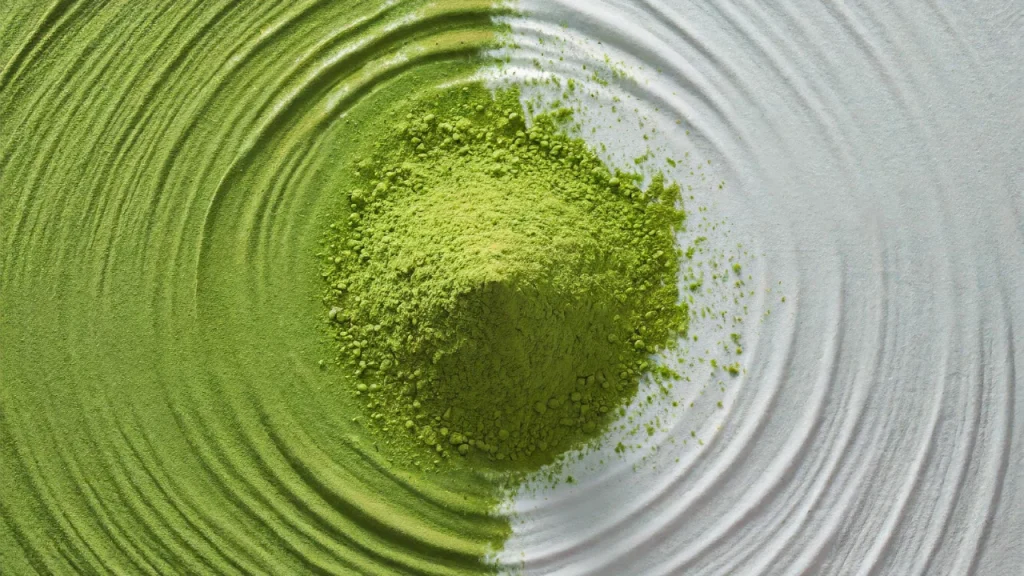
If you want to take matcha powder home from Asakusa, your options are Suzukien, a tea retailer behind its gelato counter, Chawawa for gift-friendly matcha sweets near Senso-ji, and Uji no Kura, a backstreet matcha specialist. Check the color, the stated region and the packing date, and buy small: a 30g tin makes about 15 thin bowls.
At some point during your Asakusa matcha crawl, the thought arrives: I need to take this home. Good instinct — matcha is one of the few Japanese souvenirs that’s genuinely better bought here than ordered later: fresher stock, better selection, and you can taste before you commit.
Here’s where to buy matcha powder in Asakusa, what to look for, and how to get it home in good shape.
First, a 30-second quality check
Before any shop list, arm yourself with the three signals of real matcha (the full explainer is in our beginner’s guide):
- Color: vivid, electric green. Olive or khaki tones mean old stock or sun-grown leaf.
- Words that matter: look for shade-grown, stone-milled, first harvest, and a named region. “Ceremonial grade” alone is marketing, not a regulated standard.
- Packaging: sealed tins or foil bags, ideally with a harvest or packing date. Matcha’s enemies are air, light, and time.
Where to buy in Asakusa
WOW!CHA — our own 30g tin. Full disclosure: ours. The matcha we use every day at our Rokku Broadway stand, chosen for the latte-friendly profile most home drinkers want, also comes in a 30g tin under the WOW!CHA name. It’s the simplest possible quality test: taste the drink first, and if you like what’s in your cup, order the tin. Tins are sold in sets of three and shipped from Tokyo. Ordering from overseas? See our online shop (US orders include duties and shipping; other countries include shipping, with any duties paid on delivery). Ordering within Japan? See our Japan shop.
Suzukien (壽々喜園) — the tea retailer behind the gelato. Suzukien is best known for its matcha gelato, but it is a tea retailer first. Behind the ice-cream queue is a proper selection of teas and matcha. Its official page says you can buy teas from around Japan, mainly Japanese tea, and eat in at the shop. It is open 11:00–17:00 with irregular closing days, so check before you go. If you’re already braving the line for the No.7, budget ten extra minutes for the shelves.
Chawawa (茶和々) — the souvenir stop. Steps from Senso-ji, Chawawa pairs its matcha warabi mochi with a spread of matcha take-home goods. Best for gift-shopping in volume — the packaging is built for handing out back home.
Uji no Kura — the purist’s counter. The backstreet matcha specialist serves whisked-to-order bowls. The shop’s English page says: “Due to a shortage of matcha for in-store use, we will be open only on Mondays for the time being.” Hours are 11:00–16:00 on Mondays, so plan around that day or check the shop’s site before you go.
| Shop | Best for | Note |
|---|---|---|
| WOW!CHA | A latte-friendly matcha in a 30g tin | Order online: overseas or Japan |
| Suzukien | Teas and matcha, behind the gelato counter | 11:00–17:00, irregular closing days (checked Nov 20, 2026) |
| Chawawa | Matcha gifts and sweets near Senso-ji | Check hours before you go |
| Uji no Kura | Tasting a bowl before you decide | Mondays only, 11:00–16:00 (checked Nov 20, 2026) |
How much should you buy?
A useful rule of thumb: a traditional thin bowl of matcha uses about 2 grams, so a 30g tin is roughly 15 thin bowls, or about seven lattes. Matcha fades after opening, so two small tins beat one big bag unless you drink it every day.
Getting it home (and keeping it alive)
- Flying: sealed tins and foil bags travel fine in checked or carry-on luggage.
- At home: airtight, cool, dark. The fridge works — just let the tin come back to room temperature before opening it, or condensation will clump the powder.
- Use it within a couple of months of opening. Matcha is produce, not pantry filler. If it turns olive and smells like hay, it’s telling you something.
Match the matcha to how you’ll drink it
- Mostly lattes at home? A bold, latte-tuned blend (like ours) will survive milk. Delicate top-grade matcha won’t.
- Want to learn whisking? Buy from a counter where you can taste it straight first, and pick up a chasen (bamboo whisk) while you’re in the neighborhood.
- Gifts for the office? Chawawa-style boxed sweets travel better than powder for people who don’t own a whisk.
For the full neighborhood picture — what to drink while you shop — start with the 10 best matcha desserts near Senso-ji.
Planning the rest of your day? See our guide to matcha spots in Asakusa without the wait, or try a fruit matcha latte on Rokku Broadway.
Related guides: Tea ceremony in Asakusa: prices and English · Best matcha latte in Asakusa · Bubble tea in Asakusa
FAQ
How can I tell if matcha is good quality?
Look for a vivid, electric green color, words like shade-grown, stone-milled and first harvest, a named region, and sealed packaging with a harvest or packing date. “Ceremonial grade” alone is marketing, not a regulated standard.
How much matcha should I buy?
A traditional thin bowl uses about 2 grams, so a 30g tin is roughly 15 thin bowls, or about seven lattes. Two small tins beat one big bag unless you drink it every day.
Can I take matcha on a plane?
Yes. Sealed tins and foil bags travel fine in checked or carry-on luggage.
How should I store matcha at home?
Keep it airtight, cool and dark. The fridge works, but let the tin return to room temperature before opening it, or condensation will clump the powder. Use it within a couple of months of opening.
Which matcha is best for lattes?
A bold, latte-tuned blend survives milk. Delicate top-grade matcha won’t.
WOW!CHA Asakusa (Rokku Broadway)
2-5-5 Asakusa, Taito-ku, Tokyo 111-0032
Nearest station: Tsukuba Express Asakusa
Mon–Thu 11:00–17:00 / Fri–Sun 11:00–21:00. Open days are announced on our Instagram.
Second stand: Tokyo Dome City
All drinks iced · 16 oz · 100% real matcha
Find us on Google Maps
Hours checked November 9, 2026 (Suzukien and Uji no Kura rechecked November 20, 2026)